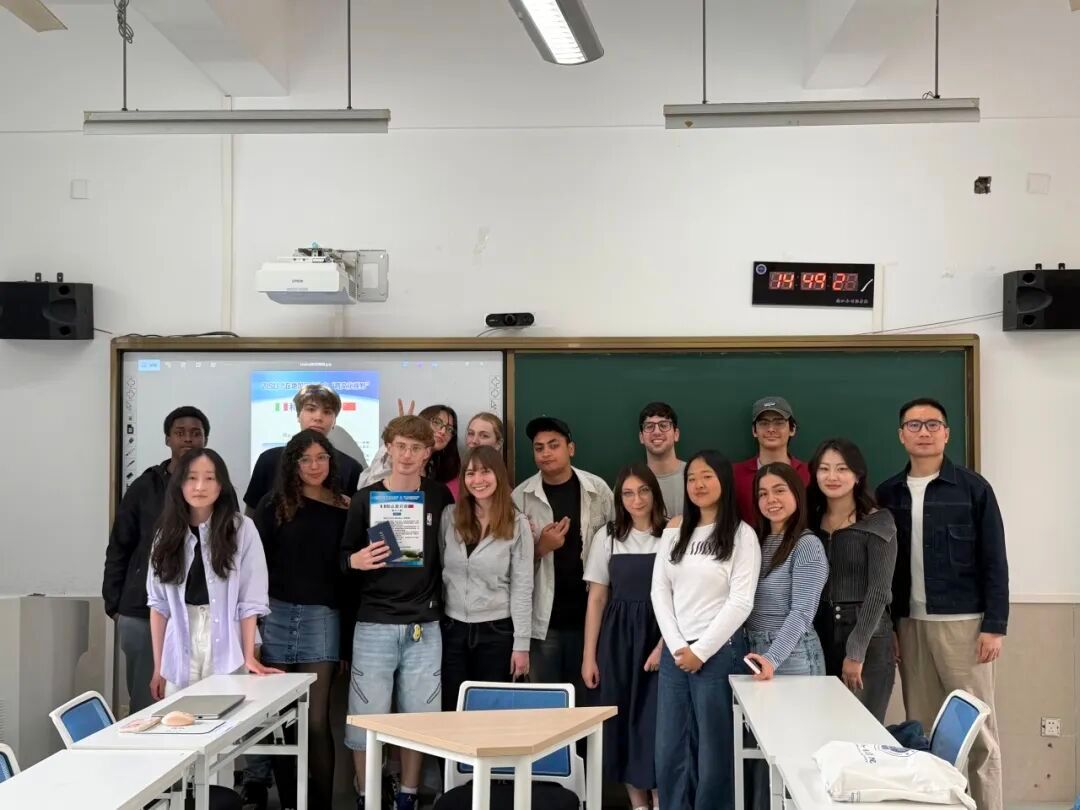
为了进一步了解和关心国际留学生在校学习和生活情况、增进对中外大学生所在的国家文化的认识、培养学生国际视野、促进文化交流和文明沟通,国际学院推出了教育开放推广季“跨文化视野”之“和山面对面”系列访谈节目。
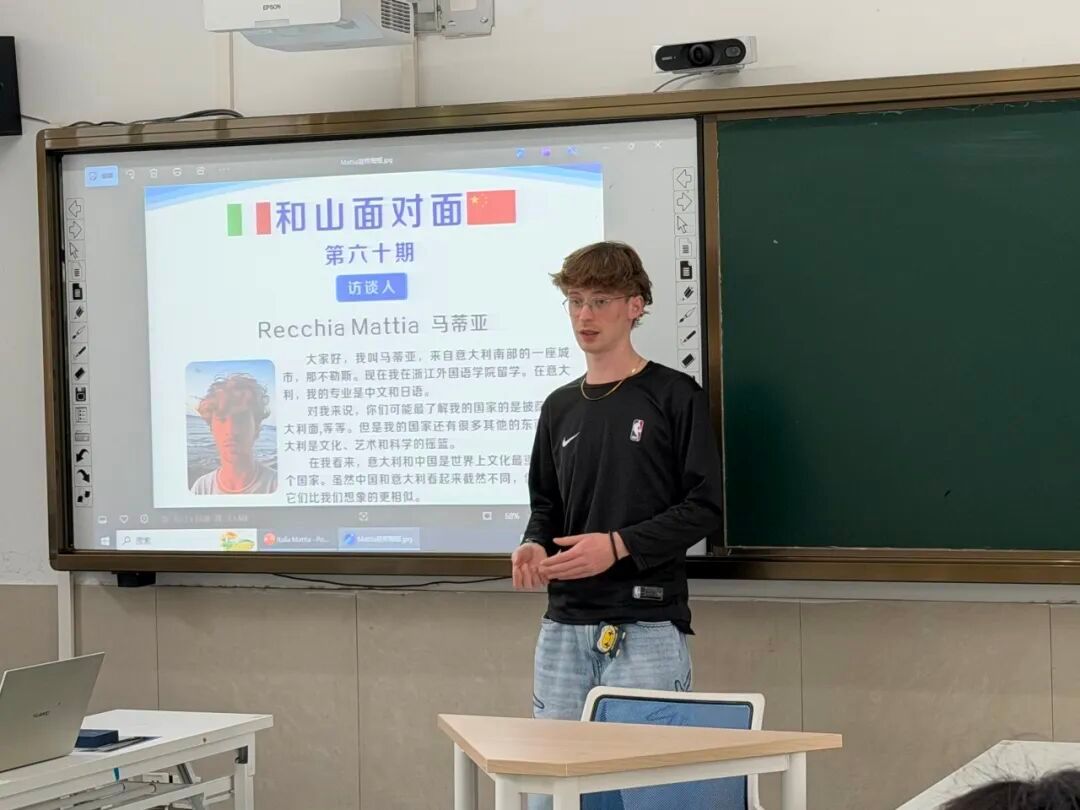
4月2日的活动由国际学院留学生管理专员郑天慧主持,特邀来自意大利的留学生马蒂亚(Recchia Mattia)作为嘉宾。马蒂亚来自意大利南部的那不勒斯——一座被阳光、海水和千年历史浸润的城市。他从古罗马的遗产讲到文艺复兴的辉煌,从伽利略仰望星空的勇气说到费米开启原子时代的智慧;他带我们看见达·芬奇笔下《蒙娜丽莎》的微笑,也带我们感受米开朗基罗雕塑中凝固的力量;他带我们细嗅北方奶香浓郁的烩饭,也带我们品尝南方阳光下熟透的番茄与鲜甜的海鲜。马蒂亚已经有了9年的中文学习经验,他认为,意大利和中国是世界上最重要的两个文明。从罗马帝国与汉朝开始,中意之间就有着悠久的交往历史。今天,他站在这里,不是要强调差异,而是希望让大家了解意大利的文化与美,也了解两国之间延续千年的友谊。
马蒂亚,来自意大利,目前就读于汉语语言与文化专业。
Recchia Mattia, from Italy, is currently studying Chinese Language and Culture.

1.问:你向我们展示了意大利的很多方面,比如历史、艺术、音乐、美食。但如果你只能选择一个来代表意大利最令你着迷的那一点,你会选择什么呢?
马蒂亚:我想大概会是文化。关于创新,我认为这就是我们最注重的方面。正如我之前所说,我们有如米开朗基罗、达芬奇等艺术家,我们有着丰富的文化遗产。在高中时,他们要求我们从第三学年到第五学年学习艺术史,数量之多简直令人难以置信,他们要求我们了解的内容太多了,而且绝大多数就是关于意大利的。
Q: You showed that Italy has a lot of stuff, like history, art, music, food. If you can only choose one to talk about the one that you are more fascinated about your country, which one would it be?
Mattia: Probably it would be culture. Innovations. That's I think what we're most renovated for. As I said before, like Michelangelo, Leonardo and so on, because we have an immense cultural luggage. In high school, they make us study history of art from the third year to the fifth year, and it's crazy the amount of things they want you to know about. And most of it is Italian.
问:我总是在新闻上看到,有人会把意大利面折断,意大利人怎么看待这种行为?
马蒂亚:这得看情况。我们确实会把意大利面弄碎,但这只是为了给孩子们吃,因为他们吃不了太长的意大利面。但是,如果我看到有人像你这样煮意大利面并把意大利面弄碎,我会说:“什么?”在某些情况下这可能没问题,比如为了煮汤,那么你可以切碎它,但这必须要有一定的目的。
Q: I always watch the news or other things. I saw when they broke the spaghetti like this. Italian people, how they feel?
Mattia: Depends. We break spaghetti but only for the kids. Because they cannot eat long pasta. But, if I saw someone like you cooking pasta and breaking spaghetti, I would say, what? Maybe in some occasions it's okay. For example, when you're making soup, then you can cut it. But it has to serve a purpose.
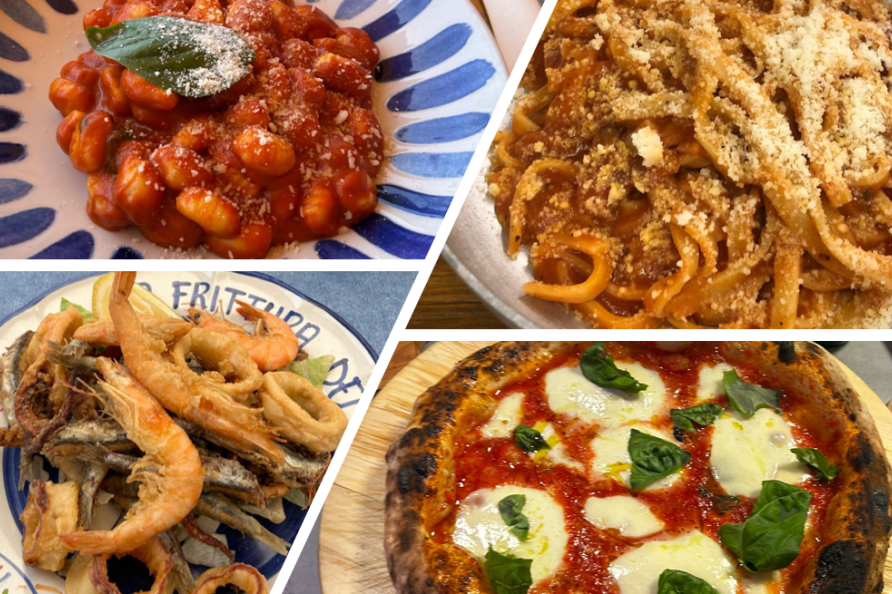
问:我知道那不勒斯的玛格丽特披萨很出名。它和意大利其他地方的披萨相比有什么不同之处呢?
马蒂亚:在那不勒斯,我们有着长久的制作披萨的传统和经验。我们当然不只是做玛格丽特披萨,我们当然还做不同的口味和风味。比如说,我非常喜欢那种搭配有炸薯条和鱼肉片的美国口味。这确实很奇怪,主要是为了孩子们准备的,但我还是很喜欢。而且我认为这和我们使用的面粉和水的种类是不同的。实际上,一些在在国外工作的人,甚至在中国,他们会使用从意大利带来的面粉和水来制作披萨,因为它本身就具有独特的特点。我在意大利的很多地方都吃过披萨,但最好的还是那不勒斯风味的。
Q: I know Naples is famous for your Pizza Margherita, so what makes your pizza so special from others?
Mattia: Well, in Naples, we have years and years of tradition and experience in making pizza. We don't only make margherita pizza, of course, we make different tastes and flavors. For example, I really like the American one, which is with french fries and dorsal. It's really weird, it's mostly for children, but I like it. And I think it's different from the kind of flour and water we use. And actually, some people who work abroad, even China, they bring Italian flour and water to make pizza here, because it has its own characteristics. I've tried pizza in many places in Italy, but the best one is always the Neapolitan one.
2.问:每个国家都有其独特的面貌。比如:当我们谈论俄罗斯人时,对我们来说,他们看起来可能更冷酷。那么你觉得意大利人是怎样的呢?
马蒂亚:我认为大家不是通过面貌,而是通过手势来认出意大利人。这就是我们与你们的不同之处。但如果非要描述的话,我会说我们会有很多面部表情,比如当我们交谈和说话时,我们既不冷淡也不过于热情。这还取决于你是来自北方还是南方。但真正让我们与众不同的是我们用面部表情来应对事物的方式。
Q: Every country has their face, like, when we talk about the Russian people, for us, they look colder. So, what do you think Italian face?
Mattia: I think someone might recognize someone who is Italian not by the face but actually the gestures. That's what makes us different from all of you. But if I had to choose just the face, we make lots of facial expressions, like when we talk and when we speak, we're not cold or too warm. It depends also if you're from the north or the south. But what really makes us distinct ourselves is the way we react to things with our faces.
问:有没有什么关于意大利人的刻板印象是你想要纠正的?
马蒂亚:实际上大多数的刻板印象都是真的。比如我们经常做手势,这是真的。而且我们非常吵闹。大多数意大利人说话速度都很快。我认为意大利语是速度最快的语言之一。我记得看过一张图表,意大利语在上面的排名大概是第七、第八名之类。
Q: Any stereotypes you want to correct for Italian?
Mattia: Well, actually most of the stereotypes are actually true. Like people say we make hand gestures a lot and that's true. And we're very noisy. Most of us speak really fast. I think Italian is one of the fastest languages to be spoken. I remember seeing a chart and it said like 7th, 8th place.
3.问:意大利人真的爱国吗?
马蒂亚:我确实非常爱国。我愿意为自己的国家献出生命。大多数年轻人似乎并不那么欣赏意大利,很多人会说:“我不愿意在战争中服役,我不愿意为我的国家效力。”这让我有点难过和生气,因为你们不仅是在捍卫一个由政治主导的国家,更是在捍卫多年的历史、文化、艺术以及你们所爱的人。所以这要看具体情况。对我来说,是的,我非常爱国。当然,中国在我的心中也有着非常重要的地位,我认为中国和意大利对我来说就像食物和水一样。或者就像我的两个肺,这里一个,那里一个,这是中国,这是意大利。
Q:Are Italians really patriotic?
Mattia: I'm really patriotic. I would die for my country. Most of the young people, they don't seem to be appreciating Italy in that way. Many people would say, I would not serve in case of war, I would not serve my country. It makes me a little sad and mad, because you're not only defending a nation led by politics, but also years of history, culture, art and also the people you love. So, it depends really. For me, yes, I'm very patriotic. And of course, China has a very important place in my heart and I like to think that China and Italy are like food and water. Or like lungs. One lung here, one lung here, China and Italy.
问:意大利有哪一点是让你不太喜欢的?
马蒂亚:我对意大利的观感很复杂。我们是很好的人,但有时事情会超出我们的掌控。在意大利,犯罪行为很多,我们在政治方面也存在很大问题。在欧洲的发展中,实际上意大利是被落在了后面。我很不喜欢这样。当然每个国家都有自己的问题,只是你需要去思考,这些问题是不是比好的事物更重要,还是反之。
Q: In which aspect you feel bad about Italy?
Mattia: For me, Italy is love and hate. We are very good people, but sometimes things get ahead of ourselves. There is a lot of criminality, we have big problems with politics and we were actually left behind from all Europe. I really don't like this. And we have our problems, of course. Every country has its own problems. It's just that you need to decide whether the problems are more important than the good things, or vice versa.
4.问:在那不勒斯,意大利学生学习中文的情况是怎样的?你可以聊聊你学习中文的经历吗?
马蒂亚:我学习中文已经有九年了,在高中和大学期间都是如此。我最开始选择时,主要的原因是我真的很喜欢亚洲。我一开始喜欢的是日本,但当时没有日语课程,所以我决定选择中文,因为起初我以为它们是相似的。但后来我对中国以及中文的喜爱也一天天加深了。起初这其实只是一次“由无知导致的错误”,但正是这个“错误”最终引领我走上了,我想,是我一生中最美好的爱情之路。所以,是的,我绝不会用中文去换取任何其他东西,我认为中文是一种美妙的语言,一种美妙的文化,但对我来说,有时它也让人感到非常沮丧,但我也非常喜欢学习中文带来的挑战。每次说中文,我都会面临一个新的挑战,一种新的方言,一个新的我不知道的词汇。我觉得这种感觉会永远持续下去,而且我认为这不会发生在其他语言上。所以这就是我选择学习中文的原因,我至今仍然热爱并选择中文,而且我会一直坚持下去。至于意大利的中国学生,正如我所说,我的大学是整个欧洲第一所开设中文教学的大学,如今意大利有很多人学习中文,但很多人并没有完成学业,因为他们一开始认为学习中文很容易,但实际上这是一门相当难的语言,尤其是对欧洲人来说。我认为学习中文确实对人们有帮助,尤其是从工作方面来看。如果你在意大利以及整个欧洲懂中文,我认为你将拥有一个绝佳的机会,甚至比任何人都要好。
Q: In Napoli, how is the situation of studying Chinese with Italian students? And can you talk about your experience of learning Chinese?
Mattia: I've been studying Chinese for 9 years now, in high school then at university. At first, when I picked Chinese, it was because I was really fond of Asia. I fell in love with Japan at first, but there were no Japanese courses, so I decided to pick on China, at first thinking that they were similar. But then I actually discovered Chinese, I grew day by day more in love with China, and Chinese in general. At first, it was just a mistake led by ignorance, that actually led me to, I think, to the biggest love of my life. So, yeah, I would never trade Chinese for anything else. It's a beautiful language, beautiful culture, but it's also, to me, very frustrating sometimes. But I like the challenge of Chinese. Every time I speak Chinese, I have a new challenge, a new dialect, a new word that I don't know, and I think that's gonna be like forever. And I don't think that could happen for other languages. So that's why I picked Chinese, and I still love and pick Chinese, and I will pick it for the rest of my life. As for Chinese students, as I said, my university was the first Chinese teaching university in the whole Europe, and nowadays many people study Chinese in Italy, but not many finish the degree, because they start thinking it would be easy, and then they actually find out it's quite a difficult language, especially for us Europeans. And I think it really helps people, especially like work-wise. If you know Chinese in Italy and Europe, I think you have a great opportunity, like more than anyone else.
郑天慧:原来是这样。听了你今天的讲述,我们不仅更加了解了你的家乡意大利,尤其是那不勒斯,还从你的经历中感受到了跨越山海依然相似的温暖与热情。非常感谢你今天的分享!也祝你和今天所有到场的同学一切顺利!
马蒂亚:谢谢大家的聆听和提问!祝大家天天开心!
Zheng Tianhui: So that's how it is. After your presentation today, we not only gained a deeper understanding of your hometown Italy, especially Naples, but also felt the warmth and enthusiasm that remain similar despite the distance. Thank you very much for your sharing today! And I wish you and all the students every success!
Mattia: Thank you all for listening and asking questions, and I wish you all a happy day!