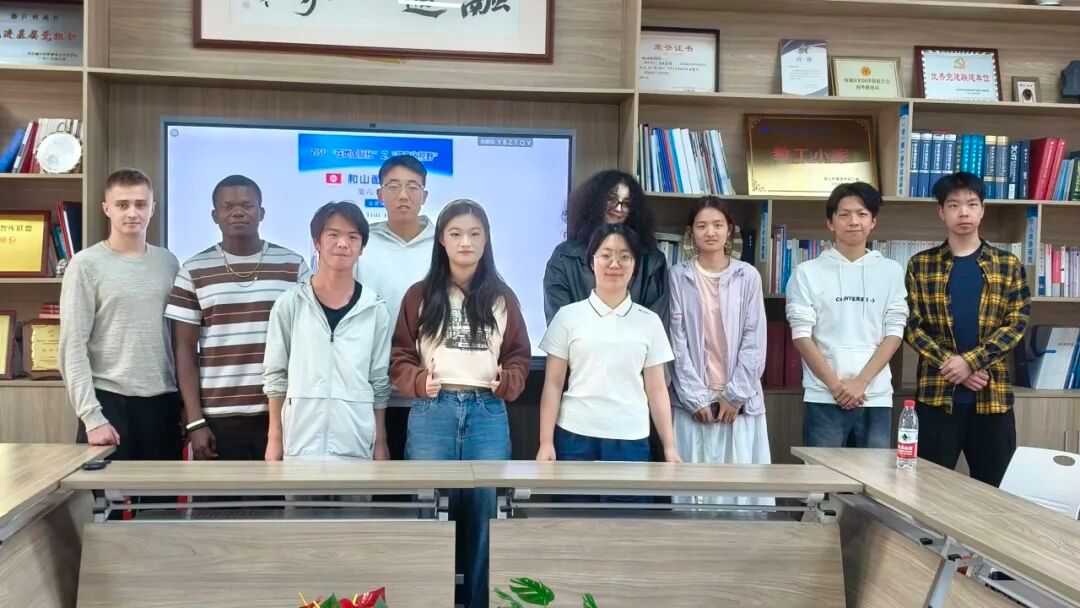
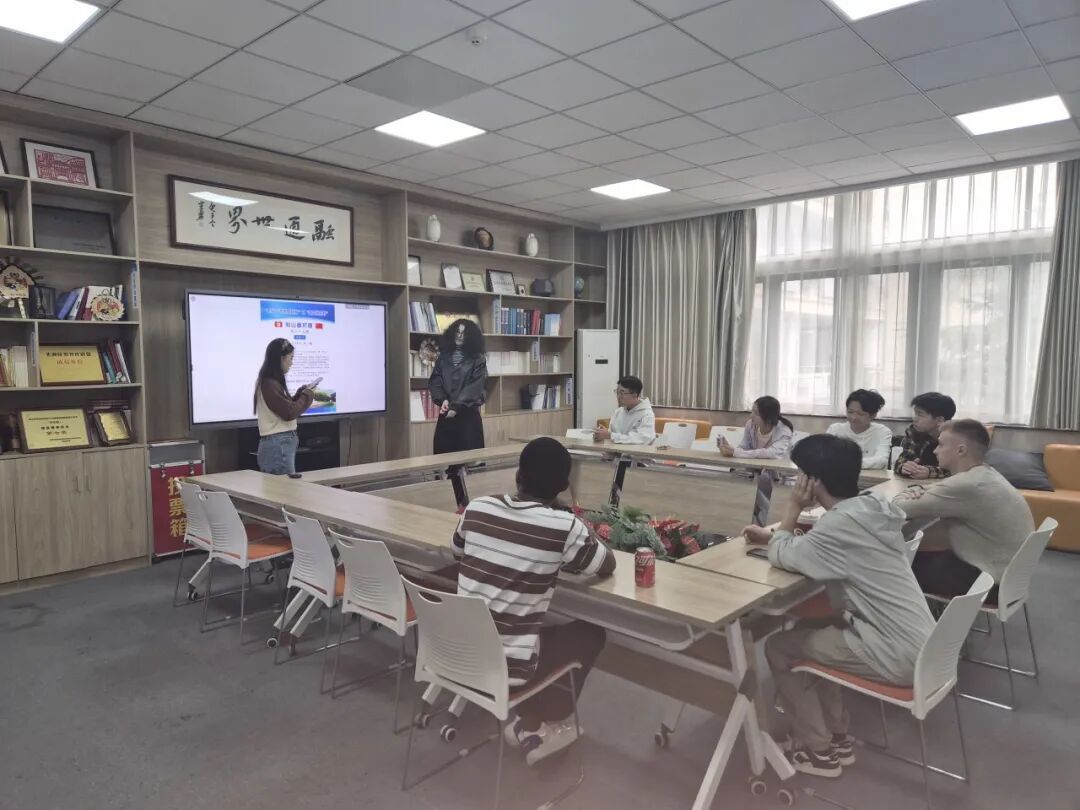
为进一步了解和关心国际留学生在校学习和生活情况、增进对中外大学生所在国家文化的认识、培养学生国际视野、促进文化交流和文明沟通,国际学院推出了教育开放推广季“跨文化视野”之“和山面对面”系列访谈节目。
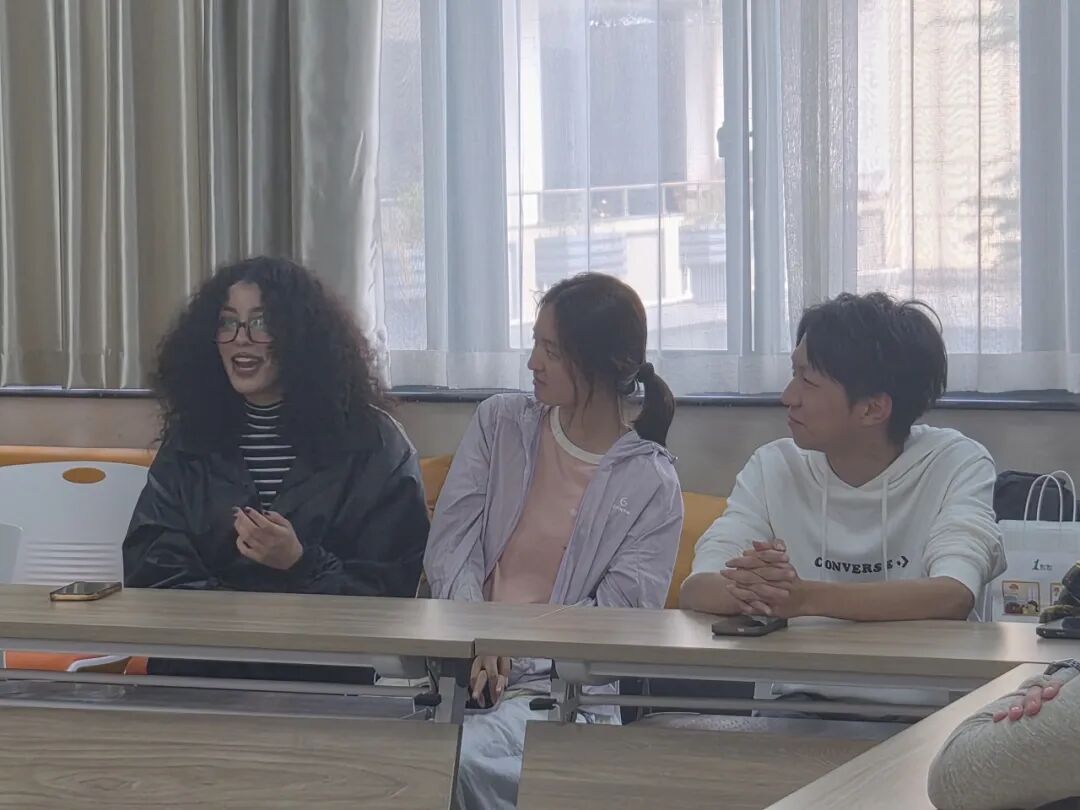
10月30日的活动由25级阿拉伯语专业的赵芯艺主持,特邀来自突尼斯的留学生林一帆(Ilef Tlili)作为嘉宾。
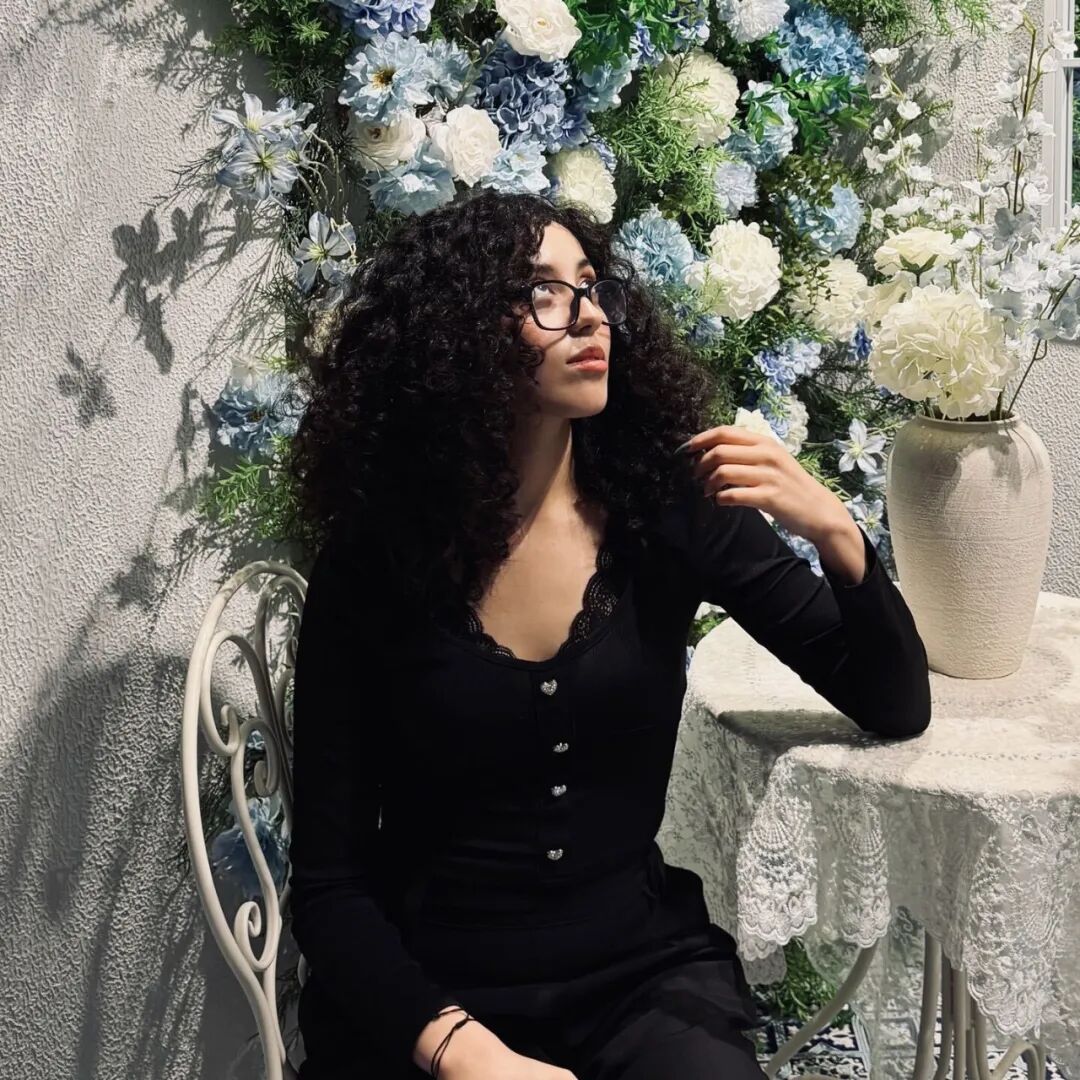
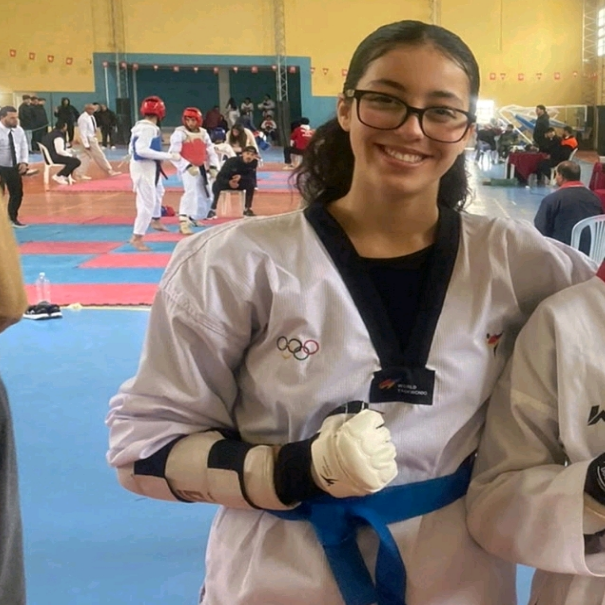
对于这位19岁的突尼斯女孩来说,文化的边界似乎从来不是阻碍——从阿拉伯语、法语、英语、韩语到正在努力攻克的中文,她用五种语言丈量着世界的广度;从跆拳道的凌厉到绘画与音乐的细腻,她又在动静之间探索着自我。这一次,林一帆将作为文化桥梁,带我们走进她的家乡。透过这位多面少女的眼睛,我们将重新认识那个镶嵌在地中海南岸的迷人国度——突尼斯。这里不仅有撒哈拉沙漠的苍茫与蓝白小镇的浪漫,更交织着阿拉伯风情与欧洲文化的独特气韵。在本次访谈中,她将用自己跨越语言与文化的亲身经历,带我们感受北非大地那份融于日常的热情与包容。
林一帆,来自突尼斯,目前就读于商务英语专业。
Ilef Tlili, from Tunisia, is currently studying Business English.
1. 问:你有没有试过你们国家的传统舞蹈?
林一帆:当然,我是突尼斯人,当然会跳。不过我现在没法跳给你们看。我只在家庭婚礼或聚会时,跟着传统音乐才跳。没有音乐、氛围和传统服装,那种舞跳出来不好看,得大家聚在一起才有那个味道。
Q: Have you tried your country's traditional dance?
Ilef: Of course, I'm Tunisian, so yes, but I can't dance for you now. I only dance with my family during weddings or gatherings when there's our traditional music. You can't really dance that kind of dance without the music, the atmosphere, and the clothing, because it only looks beautiful when people are together.
问:你们传统的穿着方式,是和你们的文化有关,还是和宗教有关?
林一帆:你说的是遮盖身体的那种方式对吧?这和宗教没关系。因为我们不是阿拉伯人,我们最初是阿马齐格人,伊斯兰教传来之前我们不是穆斯林。我们的起源是阿马齐格,不是阿拉伯。那种全身遮盖是过去的保守思想,是当时的男人强迫女人那样穿的。但现在独立之后,没人强迫女人了,她们愿意穿才穿。
Q: The way you dress traditionally, is it related to your culture or your religion?
Ilef: You mean covering the body like that? It has nothing to do with religion. We are not Arab — originally we were Amazigh, and we weren't Muslims before Islam came. Our roots are Amazigh, not Arabic. That full-body covering was just conservatism back in the days; men forced women to dress like that. But now after independence, nobody forces women anymore — they only wear it if they want to.
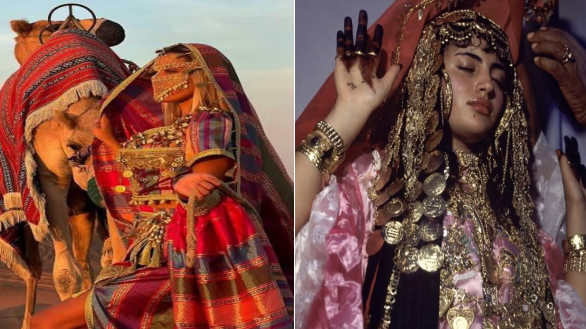
问:那你有没有试过你们国家的传统女性服装?
林一帆:当然试过。我还有照片呢。这不是一件连衣裙,是两部分组成的。下面这条裙子叫 Futa,上面这件上衣叫 blusa。我穿传统服装拍过照,可以给大家看看。
Q: Have you tried your country's traditional female clothing?
Ilef: Of course I have. I have a picture of it. It's not a dress; it comes in two parts. This is a skirt called Futa, and this is a blouse called blusa. I'll show everyone a photo of me in my traditional clothing.
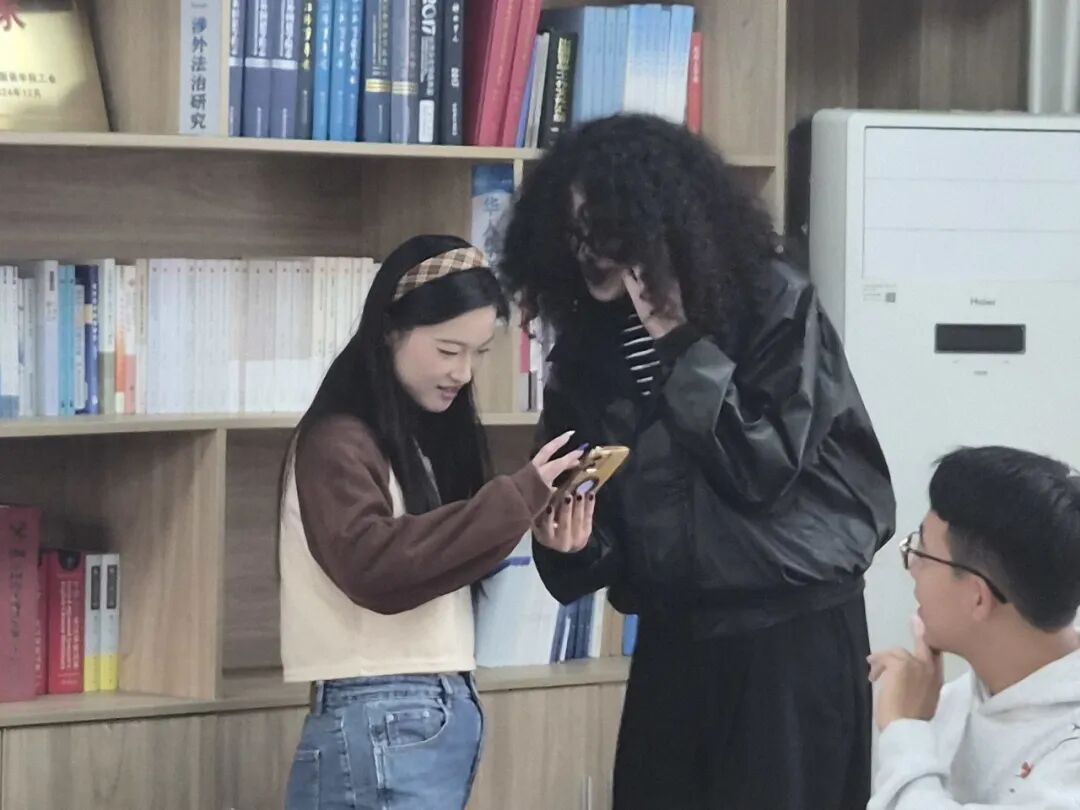
2.问:我很好奇,你为什么会说这么多种语言呢?
林一帆:我出生后听到的第一种语言是突尼斯方言 Derija。三岁开始学标准阿拉伯语,一直学到现在,但我还有很多阿拉伯语单词和规则不会,因为这门语言太丰富、太复杂了。然后六岁开始学法语,因为在我们国家,不学法语根本上不了学。小学时数学、科学等科目用阿拉伯语教,从中学到高中,所有课程都是用法语教的。不会法语就只能待在家里,没法上学。然后我开始学英语。我们还要选第三外语,可以选意大利语、西班牙语、德语、韩语或中文。我先学了德语,但接触后感觉不喜欢,所以后来才改学的韩语。有一位从韩国请来的老师教我韩语,然后就是现在啦,现在我来到中国学习中文。
Q: I’m very curious, what's the main reason you speak so many languages?
Ilef: The first language I heard as a baby was the Tunisian dialect, Derija. At age three I started learning Standard Arabic, and even now there are still Arabic words and rules I don't know because it's such a rich and complicated language. At age six I started learning French — and in my country you literally cannot pass school without French. In elementary school math and science are taught in Arabic, but from secondary school to high school everything is in French. Then I started English. We also have to choose a third optional language — Italian, Spanish, German, Korean, or Chinese. I started German but didn't like it, so I switched to Korean. I was taught by a Korean teacher brought over from Korea. And now I'm learning Chinese.
问:这么说,你是在学校学的法语吗?突尼斯的老师也用法语讲课?
林一帆:在突尼斯不学法语根本没法学习。数学、科学,所有科目都是用法语教的,所以法语对我们来说是必修课。当然除了在学校学,自己也要下功夫,因为到现在还有很多人法语不好。法语比英语还难一点,也有点像阿拉伯语。而且我的家庭方言本身就混合了很多法语词,比如冰箱,标准阿拉伯语叫 thallaja,但我们方言直接叫 Frigidaire;空调,标准阿拉伯语叫 barad,我们方言直接叫 climatiseur。所以我在正式学法语之前,日常听到的就已经有很多法语词了。
Q: Did you learn French in school? Do teachers teach in French?
Ilef: In Tunisia we can't study without French — math, science, everything is in French, so it's a mandatory subject. Of course you still need personal work; even now some people still struggle with French. It's actually more complicated than English, and a bit like Arabic. Also, my family dialect itself is mixed with lots of French words. For example, in Standard Arabic refrigerator is "thalaga," but in our dialect we say "Frigidaire" straight from French. For air conditioner, Standard Arabic is "barad," but we say "climatiseur." So I was already familiar with French words before I even started learning it formally.
问:我是阿拉伯语专业的,我们学标准阿拉伯语 Fusha,也学一些方言,特别是埃及方言。你们的突尼斯方言和它们很不一样吧?
林一帆:是的,突尼斯的 Derija 和埃及、摩洛哥以及其他阿拉伯国家的方言完全不同。我们的方言里混合了阿马齐格语、土耳其语、意大利语和法语的词汇。这都是因为历史上的占领和殖民,才让我们的语言变成这样一门混杂多种语言的语言。在我们国家,有些老人还会说意大利语,你去老城区跟他们说话,可能完全听不懂。
Q: I'm majoring in Arabic, we learn Fusha and some dialects, especially the Egyptian one. Is your Tunisian dialect very different from those?
Ilef: Yes, the Tunisian Derija is totally different from the ones in Egypt, Morocco, and many other Arab countries. Our dialect has words from Amazigh, Turkish, Italian, and French thrown in. It's all because of the occupations and settlements in our history that we ended up with this kind of rich language made of so many languages. Some old people in my country even speak Italian — when you go to the old city and they talk to you, you won't understand anything.
问:原来是这样!像我们在场很多人都在学语言,既然你会说这么多门语言,你有没有什么快速学语言的技巧或方法呢?
林一帆:首先你得有热情。你不喜欢一件事,就不会成功——就像学数学,没人喜欢,所以没人擅长。你得真正享受学这门语言的过程。然后你要花时间,没有什么是能一蹴而就的。学语言需要时间、耐心、热情和投入。有些人中途觉得无聊就放弃了,但放弃不是办法。如果你想流利有效地说一门语言,你得为自己设定严格的规则并坚持下去。还要多练习,可以找语伴,现在科技也很发达,可以用手机 APP 辅助日常学习。
Q: Oh I got it. We're all language learners, do you have any tips or ways to learn a language quickly?
Ilef: First of all, you have to have the passion. If you don't like doing something, you're not going to succeed — like math, nobody likes it, which is why nobody is good at it. You have to enjoy learning the language. Then you have to give it time; nothing happens overnight. Learning a language needs time, patience, passion, and commitment. Some people get bored along the way and quit, but quitting isn't an option. If you want to speak a language fluently and effectively, you have to follow a strict, committed routine you set for yourself. Also practice — find language partners, and use the technology and phone apps available nowadays to help you.
3.问:你去过多少个国家?你刚才说你去过很多国家。
林一帆:我去过英国伦敦、塞尔维亚、土耳其,还有中国。就这些。
Q: How many countries have you traveled to? You mentioned you've been to many.
Ilef: I've been to the UK, London; I've been to Serbia; I've been to Turkey; and China. That's it.
问:你去那些国家是为了什么?学习还是度假?比如你什么时候去的英国?
林一帆:去英国是十六岁,是为了学习。其他国家都是度假。我就是喜欢探索不同地方,这算是我人生愿望清单的一部分。去英国是因为我真的很喜欢英语,我在国内参加了很多比赛,因此获得了去英国学习的机会。
Q: What was the purpose of traveling to those countries? Study or vacation? For example, when did you go to the UK?
Ilef: I went to the UK at 16, to study. Other countries were just vacation. I just love exploring — it's like my bucket list before I die. I went to the UK because I really love the English language; I participated in many competitions in my country, and that's how I got the opportunity to travel there.
问:你最喜欢哪个国家?
林一帆:来中国之前最喜欢伦敦。来中国之后,最喜欢的就是中国了。我喜欢中国,因为中国人太好了。他们热情、友好、善良、乐于助人,而且不求回报。他们让我爱上了这个国家。刚来的时候我每天都哭,打电话给妈妈说想回家。但后来认识了很多中国朋友,他们帮助我,让我感觉像在家一样,不再觉得自己是外国人,走在街上就像在自己国家一样。不像在英国,我觉得自己完全是个游客,什么都不懂。英国人都很严肃,只顾着工作,就算你快不行了也没人给你水喝。中国人完全不一样。说实话,我就是因为中国人而爱上中国的。现在我都不想回国了。
Q: Which country is your favorite?
Ilef: Before I came to China, it was London. After I came to China, it's China. I love China because of the people. They're warm, friendly, kind, helpful, and they don't need anything in return. They made me fall in love with this country. The first days I came, I cried every day and called my mother saying I wanted to go back. But after getting to know Chinese people and making so many friends who helped me, they made me feel at home — I no longer feel like a foreigner. Unlike in the UK, where I felt like a complete tourist. People in the UK are all serious, just heading to work; even if you're dying, nobody would give you water. People in China are something else. To be honest, I just love China because of the people. Now I no longer want to go back to my country.
问:那在突尼斯有很多中国人吗?
林一帆:在我们国家很少看到中国人。有时会看到韩国人,因为韩国和突尼斯关系很好,我们国家练跆拳道,还有国际冠军,所以韩国人比中国人常见。
Q: Are there many Chinese people in your country, Tunisia?
Ilef: In my country you rarely see Chinese people. Sometimes you see Korean people because the relationship between Korea and Tunisia has been good — we do taekwondo and have international champions. That's why I see Koreans more than Chinese people.
问:那中国公司呢?你们国家有中国公司吗?
林一帆:有的,我们国家有一些中国公司。说实话,我们国家几乎所有东西都是中国制造的。我们国家和中国关系也很好,有进出口贸易往来。而且我们国家的工科学生可以去中国公司实习。
Q: What about Chinese companies? Are there Chinese companies in your country?
Ilef: Yes, we do have some Chinese companies in my country. To be honest, everything we use in my country is made in China. My country has a good relationship with China too — like an import and export relationship. Also, engineering students in my country do their internships at Chinese companies.
4.问:你来中国之前对中国有什么印象?有没有什么刻板印象?
林一帆:我从小就喜欢中国文化。我小时候在家就用筷子吃饭,模仿中国人的样子,我妈妈都说"我们干脆把你送到中国去吧"。我看很多中国电影,对中国文化非常着迷。从电影里了解到文化后,我就想亲自来体验。我不想只在屏幕上看,我想尝尝这里的食物,和这里的人交流。来中国我从来没有后悔过。
Q: What did you think of China before coming here? Were there any stereotypes?
Ilef: I loved China since I was a kid. I ate with chopsticks at home when I was little and used to imitate Chinese people — my mother would say, "We'll just send you to China." I watched a lot of Chinese cinema and was obsessed with the culture. From the films I got to know the culture, and then I wanted to experience it myself. I didn't want to just see it on the screen; I wanted to be there, try the food, and talk to the people. I've never regretted coming to China.
问:你是什么时候开始喜欢上中国文化的?
林一帆:我买了手机之后,开始用各种 APP 认识人。另外我们学历史,历史课上也会简要讲到中国。不过只是简要了解,不是很深入——我们国家什么都教,但我们国家太小了,有时候根本消化不了那么多内容。我自己也喜欢探索不同文化,所以也会自己去了解。
Q: When did you start falling in love with Chinese culture?
Ilef: When I bought a phone, I started using apps to find people. Also, we study history, and we briefly learn about China in history class — not in depth, just briefly, because my country teaches us everything, but we're so small that sometimes it's really out of reach. I also like exploring and learning about cultures on my own.
问:你来中国之前紧张吗?还是很兴奋?
林一帆:一开始很兴奋。但当我踏上机场的时候,开始有点紧张。我担心自己适应不了,担心食物吃不惯,担心人们不友好。就是那种期待已久的事情终于要发生时的忐忑。头几天确实很难适应,我每天都哭着给妈妈打电话说想回家。但后来我认识了大家,彻底改变了想法。中国人就是“外冷内热”——可能他们看起来很严肃,是陌生人,但内心很温暖。我走到哪里都有人夸我头发好看、眼睛好看。大学里的人会主动过来跟我说我很漂亮,想认识我。他们说一开始怕我不愿意和他们说话,但其实我很想和他们交流。我希望中国人不要怕我,如果他们需要帮助,我随时都在。所以我交了很多中国朋友。
Q: Were you nervous before coming here, or just excited?
Ilef: I was very excited at first. But when I stepped foot in the airport, I started feeling a bit nervous — worried I couldn't adapt, couldn't get used to the food, or that people might be hostile. It's those second thoughts you get when something you've always wanted is finally about to happen. The first couple days were also hard; I cried to my mother every day saying I wanted to go back. But then I got to know people and shifted my mindset completely. Chinese people are mostly "Wai Leng Nei Re" — outside cold, inside warm. Maybe they seem serious and are strangers to you, but they're warm-hearted. Everywhere I go, people tell me I have beautiful hair or beautiful eyes. People at the university come up to me and say I look nice and want to know me. They told me they were scared of me at first, thinking I wouldn't want to talk to them — but on the contrary, I wanted to talk to them. I want Chinese people to feel comfortable with me; if they need help, I'll be there. That's why I have so many Chinese friends.